How to Create a Productive Home Office Environment
Creating a productive home office environment is essential for anyone working remotely or balancing home life with professional tasks. A well-designed workspace can help you stay focused, reduce stress, and increase efficiency throughout the day.
In this post, we’ll explore effective strategies to set up your home office so you can work comfortably and productively.
Choose the Right Location
Your home office should be in a quiet, low-traffic area of your home where interruptions are minimal. Ideally, select a space with natural light and good ventilation. If you don’t have a dedicated room, try to establish a consistent spot as your workspace — this consistency helps your mind associate the area with work, improving concentration.
Consider these location factors:
– Distance from noisy household areas like kitchens or living rooms
– Access to power outlets and strong Wi-Fi connection
– Room for your required furniture and equipment without clutter
Invest in Comfortable and Functional Furniture
Comfortable furniture is the backbone of an effective workspace. Sitting in an uncomfortable chair or working on a cramped desk can cause physical discomfort and reduce your productivity.
Key furniture tips:
– Choose an ergonomic office chair that supports your back and encourages good posture
– Use a desk with enough surface area to keep your computer, documents, and other essentials neatly organised
– If possible, consider a sit-stand desk to alternate between sitting and standing, reducing fatigue
Optimise Lighting for Focus and Energy
Lighting plays a crucial role in how alert and comfortable you feel. Natural daylight is best, as it helps regulate your body clock and reduces eye strain.
Lighting suggestions include:
– Position your desk near a window for natural light
– Use blinds or curtains to control glare on your screen
– Add adjustable desk lamps with warm light for late working hours
– Avoid harsh overhead lights that can cause headaches or tiredness
Keep Your Workspace Organised
A tidy workspace reduces distractions and helps you find what you need quickly. Clutter can be mentally draining, so maintaining order is vital.
Organisational ideas:
– Use storage boxes, filing cabinets, or shelves to keep papers and supplies out of sight
– Keep only essential items on your desk to maintain focus
– Use cable management tools to tidy up wires and chargers
– Develop a daily routine to clear your desk before finishing work
Minimise Distractions
Working from home presents unique distractions that can disrupt your flow. Try to identify and eliminate common interruptions.
Ways to reduce distractions:
– Inform family or housemates about your work hours and request privacy during those times
– Turn off non-essential notifications on your phone or computer
– Use headphones or white noise apps to block household sounds
– Schedule breaks to manage social interactions without interrupting your focus
Personalise Your Space Thoughtfully
Adding personal touches to your home office can make the environment more welcoming and motivating. However, avoid overcrowding the area with items that may distract you.
Personalisation tips:
– Display inspirational quotes or artwork that uplifts you
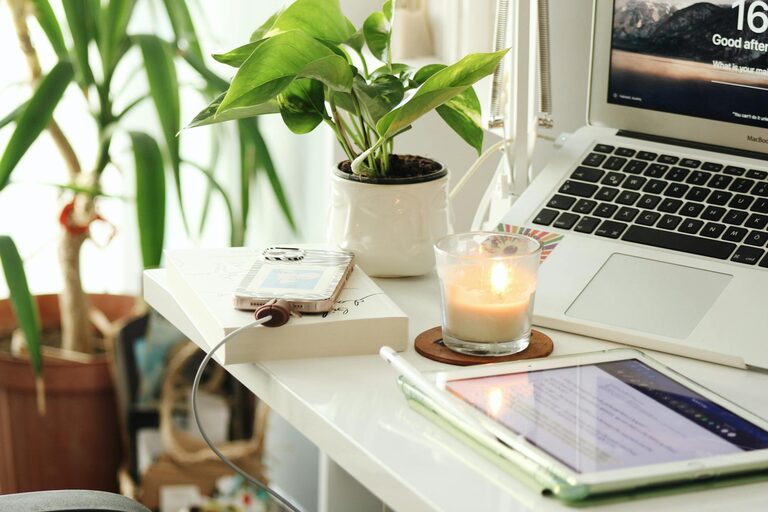
– Include a few plants to improve air quality and add a calming effect
– Choose colours that help you feel energised or relaxed, such as soft blues or greens
Prioritise Good Technology and Connectivity
Reliable technology is critical for a smooth remote work experience. Ensure your computer, software, and internet connection meet your work requirements.
Tech recommendations:
– Invest in a fast and stable internet connection to avoid disruptions
– Use an external monitor or keyboard if it improves your comfort and efficiency
– Keep software and antivirus programs updated for security and performance
– Back up important files regularly to prevent data loss
Establish a Daily Routine and Boundaries
A productive home office environment is not just physical; it also depends on your habits and mindset.
Routine-building strategies:
– Set consistent start and finish times for your workday
– Include regular breaks to rest your eyes and stretch your body
– Create a ritual to begin and end work, such as tidying your desk or making a to-do list
Boundaries to maintain:
– Avoid working in bed or on the sofa, which can blur lines between work and relaxation
– Keep work communications within designated hours to protect your personal time
Conclusion
Designing a productive home office environment requires thoughtful planning and ongoing care. By choosing the right space, investing in comfortable furniture, controlling lighting, keeping organised, and setting clear routines, you can create a workspace that helps you perform at your best every day.
Remember, a home office should support your unique needs and preferences, so feel free to adapt these tips for what works best for you. With the right environment in place, working from home can be both efficient and enjoyable.